
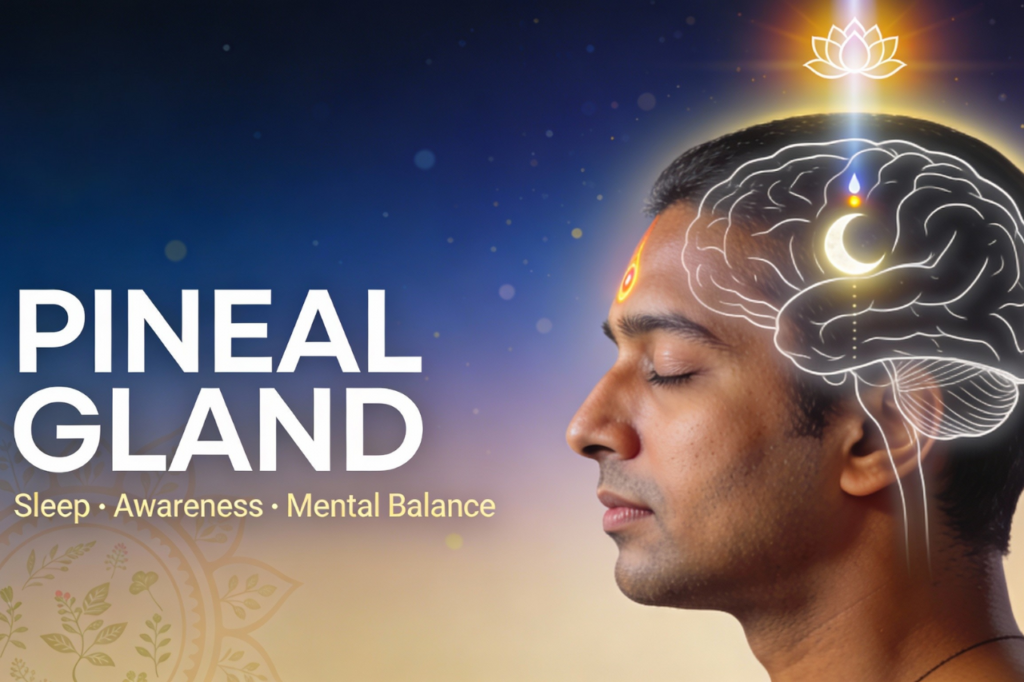
The pineal gland has gained modern attention for its role in sleep regulation and mental health. Often referred to as the “biological clock,” this small, pea-sized gland located deep within the brain influences sleep–wake cycles, hormonal balance, and emotional stability.
Interestingly, long before modern neuroscience identified the pineal gland, Ayurveda had already described its functions through subtle physiological and consciousness-based frameworks. While Ayurveda does not name the pineal gland anatomically, it clearly explains its role through concepts of manas (mind), ojas (vital essence), agni (metabolic intelligence), and higher awareness.
Understanding the Pineal Gland (Modern View)
From a biomedical perspective, the pineal gland:
- Produces melatonin, the hormone that regulates sleep–wake cycles
- Responds to light and darkness
- Influences circadian rhythm
- Plays a role in mood regulation, immunity, and aging
Disruption of pineal function is linked to:
- Insomnia and disturbed sleep
- Anxiety and depression
- Brain fog and fatigue
- Hormonal imbalance
- Reduced mental clarity
How Ayurveda Understands the Pineal Gland
Ayurveda approaches the pineal gland functionally rather than structurally. Its influence is explained through:
- Ajna Chakra – the center of perception, intuition, and mental command
- Tarpaka Kapha – responsible for nourishment and lubrication of the brain
- Sadhaka Pitta – governs intellect, emotions, and mental processing
- Prana Vata – controls higher brain functions and awareness
Together, these systems regulate sleep, cognition, emotional balance, and consciousness — the same functions now associated with the pineal gland.
Role of the Pineal Gland in Sleep (Ayurvedic Perspective)
In Ayurveda, sleep (Nidra) is one of the three pillars of health.
Healthy pineal function reflects:
- Balanced Kapha for mental calmness
- Stable Vata for nervous system regulation
- Controlled Pitta for emotional processing
When digestion weakens or stress increases, Ama (toxins) accumulate, disturbing brain nourishment. This leads to:
- Difficulty falling asleep
- Frequent waking
- Non-restorative sleep
- Mental restlessness
Ayurveda focuses on correcting digestion and calming the nervous system, rather than forcing sleep through external stimulants or sedatives.
Pineal Gland & Mental Awareness
Ayurveda views awareness as a result of:
- Clear sensory perception
- Balanced emotions
- Nourished brain tissues
- Stable nervous system
When pineal-related functions are balanced:
- Thoughts become clearer
- Decision-making improves
- Emotional reactions reduce
- Awareness increases
Excess stress, screen exposure, irregular routines, and mental overload disturb Prana Vata, leading to anxiety, overthinking, and mental fatigue — symptoms often associated with pineal dysfunction today.
Pineal Gland & Emotional Balance
Mental health, according to Ayurveda, depends on the harmony between:
- Mind (Manas)
- Intellect (Buddhi)
- Memory (Smriti)
Imbalance in these leads to fear, worry, anger, or dullness.
The pineal gland’s role in hormonal signaling aligns closely with Sadhaka Pitta, which governs emotional intelligence and inner stability. When disturbed, individuals may experience mood swings, irritability, or emotional exhaustion.
Why Modern Lifestyles Affect Pineal Health
Several modern habits disrupt pineal balance:
- Excessive artificial light exposure
- Irregular sleep cycles
- High mental stimulation at night
- Poor digestion and late meals
- Chronic stress
Ayurveda sees these as violations of Dinacharya (daily rhythm), which directly impacts brain nourishment and awareness.
Ayurvedic Approach to Supporting Pineal Balance
Rather than targeting the gland directly, Ayurveda focuses on restoring systemic balance through:
- Digestive correction
- Nervous system calming
- Sleep regulation
- Mental discipline and routine
This holistic approach ensures the pineal gland functions naturally, without suppression or stimulation.
A Deeper Insight
The pineal gland is not just a sleep regulator — it is deeply connected to mental clarity, perception, and inner balance. Ayurveda teaches that awareness is not created, but uncovered by removing disturbances.
When digestion is clean, the nervous system is calm, and the mind is disciplined, sleep deepens, emotions stabilize, and awareness naturally expands.