
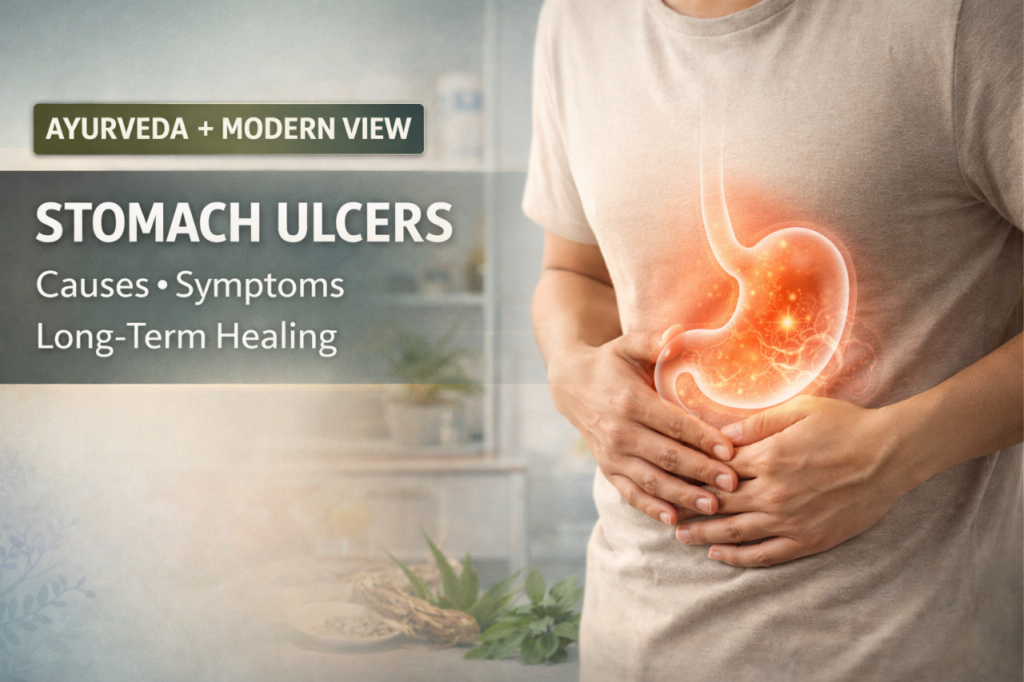
Stomach ulcers, medically known as gastric ulcers, are more than just a digestive issue. They reflect deeper imbalances in digestion, lifestyle, stress, and internal healing capacity. While modern medicine often focuses on symptom suppression, long-term relief depends on understanding why ulcers form and how the body heals.
A sustainable approach looks beyond temporary relief and addresses the root cause.
What Are Stomach Ulcers?
A stomach ulcer is an open sore that develops on the inner lining of the stomach when the protective mucosal layer becomes weakened. This allows digestive acids to damage the stomach wall, leading to pain and discomfort.
Ulcers develop gradually and often go unnoticed until symptoms worsen.
Common Causes of Stomach Ulcers
1. Excess Stomach Acid
An imbalance between acid production and mucosal protection is one of the primary causes. High acidity irritates and erodes the stomach lining over time.
2. Chronic Stress
Stress directly affects digestion by disturbing acid secretion, slowing healing, and reducing blood flow to the stomach lining.
3. Irregular Eating Habits
Skipping meals, eating late at night, or consuming incompatible food combinations weakens digestive regulation.
4. Medication Overuse
Frequent use of painkillers and anti-inflammatory drugs can damage the stomach’s protective lining.
5. Poor Digestive Strength
When digestion is weak, food is not processed properly, leading to inflammation and toxin buildup that aggravates ulcers.
Symptoms of Stomach Ulcers
Symptoms may vary depending on severity, but commonly include:
- Burning or gnawing pain in the upper abdomen
- Pain that worsens on an empty stomach
- Bloating and heaviness
- Nausea or occasional vomiting
- Reduced appetite
- Acid reflux or heartburn
- Fatigue due to poor digestion
In advanced cases, ulcers may cause bleeding, which requires immediate medical attention.
Why Ulcers Become Chronic
Many people experience temporary relief with acid-suppressing medications, but ulcers often return. This happens because:
- The underlying digestive imbalance remains uncorrected
- Stress patterns continue
- Diet and routine are not adjusted
- Healing of stomach tissues is incomplete
True healing requires restoration, not suppression.
Understanding Ulcers from a Long-Term Healing Perspective
From a holistic viewpoint, ulcers develop when:
- Digestive fire becomes imbalanced
- Inflammation remains unresolved
- The stomach lining loses its regenerative capacity
Healing is not just about reducing acid, but about:
- Strengthening digestion
- Reducing inflammation naturally
- Supporting tissue repair
- Stabilizing mental and emotional stress
The Long-Term Healing Approach
1. Correcting Digestion
A balanced digestive system prevents excess acid production and supports proper nutrient absorption, which is essential for tissue repair.
2. Supporting Mucosal Healing
The stomach lining needs nourishment and time to regenerate. Healing-focused diets and herbal support play a crucial role.
3. Managing Stress
Mental stress directly worsens ulcer symptoms. A calm nervous system promotes better digestion and faster healing.
4. Consistent Routine
Regular meal timing, proper sleep, and disciplined lifestyle habits reduce digestive irritation and recurrence.
5. Preventing Relapse
Long-term healing focuses on strengthening the stomach so ulcers do not return once treatment ends.
Diet & Lifestyle Considerations
Healing-friendly habits include:
- Eating freshly prepared, warm meals
- Avoiding spicy, fried, and acidic foods during healing
- Maintaining regular meal timings
- Avoiding late-night eating
- Reducing caffeine and alcohol intake
- Ensuring adequate sleep
Small, consistent changes often bring more sustainable results than aggressive short-term interventions.
When to Seek Deeper Care
You should seek structured care if:
- Symptoms persist despite medication
- Pain returns frequently
- Digestion remains weak
- Stress significantly worsens symptoms
- There is unexplained weight loss or fatigue
Early intervention prevents complications and supports complete recovery.