
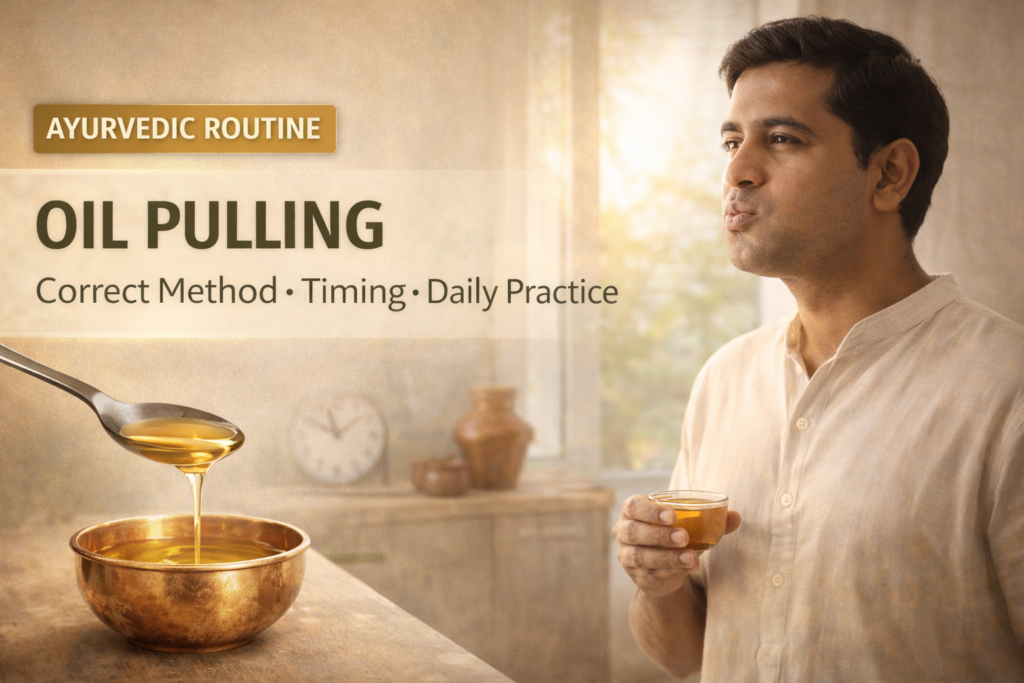
Oil pulling is one of Ayurveda’s simplest yet most powerful daily practices for oral and systemic health. Known as Kavala or Gandusha in classical texts, oil pulling is not merely about dental hygiene — it supports digestion, immunity, and overall balance when done correctly.
Despite its popularity today, many people practice oil pulling incorrectly or inconsistently, reducing its benefits. Understanding the right method, ideal timing, and daily practice guidelines is essential.
What Is Oil Pulling in Ayurveda?
Oil pulling involves holding and gently swishing oil in the mouth for a specific duration before spitting it out. Ayurveda describes it as a preventive and cleansing practice that removes toxins from the oral cavity and supports deeper systemic balance.
The mouth is considered a gateway to the digestive and respiratory systems. Keeping it clean and balanced has a ripple effect on overall health.
Why Ayurveda Recommends Oil Pulling
According to Ayurveda, oil pulling helps:
- Remove accumulated toxins (Ama) from the mouth
- Strengthen gums and teeth
- Improve oral hygiene naturally
- Support digestion indirectly
- Maintain balance in the head and neck region
It is especially beneficial for people with weak digestion, frequent acidity, bad breath, or gum sensitivity.
Correct Method of Oil Pulling (Step-by-Step)
Step 1: Choose the Right Oil
Traditionally recommended oils include:
- Sesame oil (most commonly used)
- Coconut oil (cooling, suitable for heat-related issues)
The oil should be cold-pressed and edible-grade.
Step 2: Measure the Right Quantity
Take 1 tablespoon (10–15 ml) of oil. Beginners may start with 1 teaspoon and gradually increase.
Step 3: Timing – When to Do Oil Pulling
Oil pulling should be done:
- Early morning
- On an empty stomach
- Before brushing teeth
This timing allows maximum toxin removal that accumulates overnight.
Step 4: How to Perform Oil Pulling
- Place oil in the mouth
- Gently swish and move it around the gums and teeth
- Do not gargle aggressively
- Avoid swallowing the oil
The motion should be slow and relaxed.
Step 5: Duration
- Ideal duration: 10–15 minutes
- Beginners can start with 5 minutes and increase gradually
The oil will become thinner and milky as toxins mix into it.
Step 6: Spit & Rinse
- Spit the oil into a trash bin (not the sink)
- Rinse mouth with warm water
- Brush teeth afterward
This completes the process.
How Often Should Oil Pulling Be Done?
For general wellness:
- Daily practice is ideal
For beginners:
- Start with 3–4 times a week, then increase
Consistency matters more than duration.
Signs That Oil Pulling Is Working
With regular practice, people often notice:
- Reduced bad breath
- Cleaner tongue and mouth
- Healthier gums
- Less oral sensitivity
- Improved sense of freshness in the morning
Over time, some also experience improved digestion and reduced acidity.
Common Mistakes to Avoid
- Swallowing the oil
- Gargling too aggressively
- Doing it after meals
- Using refined or scented oils
- Skipping rinsing and brushing afterward
Oil pulling should feel comfortable, not tiring.
Who Should Be Careful with Oil Pulling?
Oil pulling is generally safe, but people who:
- Have jaw pain or TMJ issues
- Feel nausea during swishing
- Have active oral infections
Should start slowly or seek guidance before daily practice.
Oil Pulling & Digestive Health Connection
Ayurveda explains that oral health reflects digestive strength. Poor digestion often shows up as:
- Coated tongue
- Bad breath
- Gum sensitivity
By reducing oral toxins, oil pulling supports Agni (digestive fire) indirectly and helps prevent toxin re-entry into the digestive tract.
Oil Pulling as Part of Dinacharya (Daily Routine)
Ayurveda recommends oil pulling as part of Dinacharya, the daily self-care routine that maintains balance and prevents disease.
When practiced consistently:
- It becomes a gentle daily detox
- Supports long-term oral and digestive health
- Enhances overall hygiene without harsh chemicals