
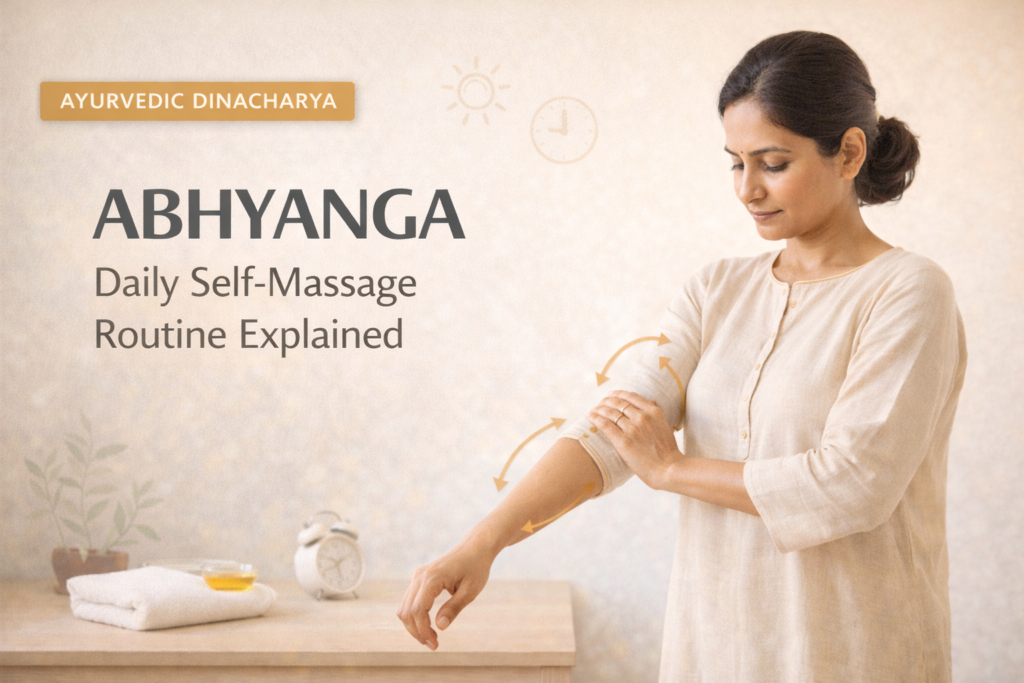
In Ayurveda, daily self-care is considered as important as treatment. One of the most valued daily practices is Abhyanga — a self-massage performed with warm oil. Far from being a luxury, Abhyanga is described as a foundational routine for maintaining health, balance, and longevity.
Ayurveda teaches that consistent daily care prevents disease more effectively than occasional intensive therapy. Abhyanga supports this philosophy by nourishing the body, calming the nervous system, and protecting tissues from degeneration.
What Is Abhyanga?
Abhyanga is the practice of applying warm oil to the body using specific strokes, usually before bathing. It is part of Dinacharya (daily routine) and is recommended for people of all ages, especially in modern lifestyles marked by stress, dryness, and irregular routines.
Unlike spa massage, Abhyanga is:
- Gentle
- Rhythmic
- Nourishing
- Preventive rather than corrective
It is meant to be practiced regularly, not occasionally.
Why Ayurveda Recommends Abhyanga Daily
According to Ayurveda, Abhyanga:
- Nourishes body tissues (Dhatus)
- Lubricates joints and muscles
- Calms the nervous system
- Improves circulation
- Supports elimination of toxins
- Reduces fatigue and stress
- Slows degenerative changes
It is particularly effective in balancing Vata dosha, which governs movement, nerves, circulation, and aging.
How Abhyanga Works Inside the Body
1. Nervous System Regulation
Oil has a grounding, calming effect. Regular Abhyanga:
- Reduces stress response
- Improves sleep quality
- Supports mental stability
- Prevents nervous exhaustion
Modern research increasingly confirms the role of touch and oil in calming the autonomic nervous system.
2. Tissue Nourishment
Ayurveda explains that oil penetrates through micro-channels (Srotas) to nourish tissues.
This helps:
- Reduce dryness
- Improve tissue flexibility
- Support repair and regeneration
- Protect joints and connective tissue
3. Circulation & Detox Support
Massage improves blood and lymphatic flow, helping mobilize metabolic waste toward elimination pathways.
This is a supportive detox, not an aggressive cleanse.
Choosing the Right Oil
Ayurveda recommends selecting oil based on body constitution and condition:
- Sesame oil – Most commonly used; warming and grounding
- Coconut oil – Cooling; suitable for heat sensitivity
- Medicated oils – Used under guidance for specific needs
Oil should be pure, cold-pressed, and slightly warmed before use.
Step-by-Step Abhyanga Routine
Step 1: Timing
- Best done in the morning, before bathing
- Can also be done in the evening for stress relief
Step 2: Preparation
- Warm the oil slightly
- Sit or stand in a warm, comfortable space
Step 3: Application Method
- Start from the scalp (optional)
- Use gentle, long strokes on limbs
- Use circular motions over joints
- Massage abdomen and chest gently
- Pay attention to feet, palms, and ears
Pressure should be firm but comfortable, never painful.
Step 4: Duration
- Ideal: 10–20 minutes
- Even 5–7 minutes daily is beneficia
Step 5: Bathing
- Bathe with warm water
- Use mild soap only if needed
How Often Should Abhyanga Be Done?
- Ideally: Daily
- Minimum: 3–4 times per week
Consistency is more important than duration.
Signs Abhyanga Is Benefiting You
With regular practice, people often notice:
- Better sleep
- Reduced stiffness
- Improved energy
- Calmer mind
- Softer skin
- Reduced stress response
These benefits build gradually.
Who Should Modify or Avoid Abhyanga?
Abhyanga may need modification or temporary avoidance during:
- Fever or acute illness
- Severe indigestion
- Heavy congestion
- Acute inflammation
Ayurveda always prioritizes digestive readiness before oil therapies.
Abhyanga vs Occasional Massage
Abhyanga is:
- Preventive
- Gentle
- Regular
- Self-directed
Occasional massage may feel relaxing, but Abhyanga reshapes daily physiology over time.
Abhyanga & Aging
Ayurveda considers aging a Vata-dominant process marked by dryness and degeneration. Abhyanga counteracts this by:
- Maintaining lubrication
- Supporting tissue flexibility
- Preserving nervous stability
This is why it is recommended throughout life, not only during illness