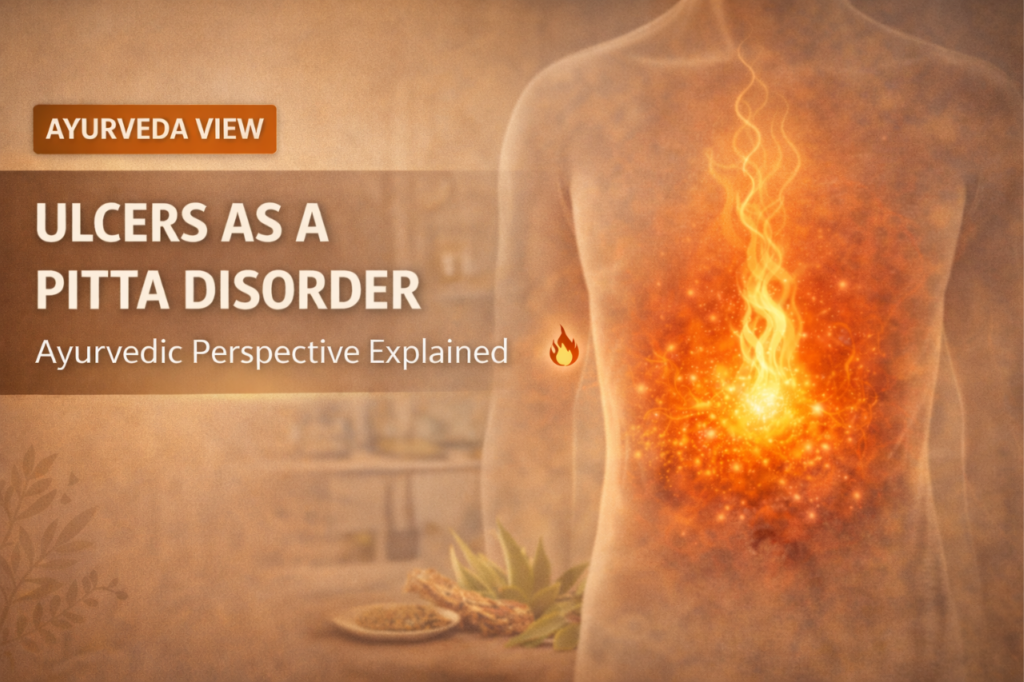
In Ayurveda, diseases are not viewed as isolated problems of a single organ. They are understood as expressions of dosha imbalance, digestive disturbance, and lifestyle misalignment. Stomach ulcers are a classic example of this deeper approach.
Rather than seeing ulcers merely as excess acid or a damaged stomach lining, Ayurveda identifies ulcers primarily as a disorder of aggravated Pitta the dosha responsible for heat, transformation, digestion, and metabolism.
Understanding ulcers through this lens changes not only treatment, but the entire healing direction.
Understanding Pitta Dosha
Pitta is the principle of fire and transformation in the body. It governs:
- Digestion and metabolism
- Enzyme and acid secretion
- Body temperature
- Inflammation and tissue transformation
- Intellect and emotional processing
When Pitta is balanced, digestion is strong and controlled.
When Pitta becomes aggravated, excess heat and acidity begin to damage tissues.
Why Ulcers Are Considered a Pitta Disorder
Ayurveda explains that ulcers form when Pitta becomes sharp, excessive, and uncontrolled, especially in the digestive tract.
This excess Pitta:
- Increases gastric acid secretion
- Weakens the protective mucosal lining
- Causes inflammation and burning sensations
- Slows tissue healing
Over time, this leads to erosion of the stomach lining what modern medicine calls an ulcer.
In Ayurvedic terms, this condition aligns with Amlapitta and Pittaja disorders, where heat and acidity dominate.
Key Causes of Pitta Aggravation Leading to Ulcers
1. Dietary Triggers
Foods that increase Pitta include:
- Spicy, sour, salty foods
- Fried and fermented foods
- Excess tea, coffee, alcohol
- Irregular or skipped meals
These overstimulate digestive fire beyond its natural limits.
2. Mental & Emotional Stress
Pitta is closely linked to emotions like:
- Anger
- Irritability
- Frustration
- Perfectionism
Chronic stress and suppressed emotions heat the system internally, worsening acidity and inflammation.
3. Irregular Lifestyle
Late nights, poor sleep, excessive screen exposure, and overwork disturb Pitta’s natural rhythm, especially during night hours when healing should occur.
4. Weak Digestive Regulation
When digestion becomes sharp but unstable, acid secretion increases without proper buffering leading to tissue irritation.
Symptoms of Pitta-Type Ulcers (Ayurvedic View)
Typical Pitta-dominant ulcer symptoms include:
- Burning pain in the upper abdomen
- Pain aggravated on an empty stomach
- Sour belching or acid reflux
- Nausea or vomiting
- Excess thirst
- Irritability or restlessness
- Sensitivity to hea
These symptoms clearly reflect heat and inflammation, hallmark signs of aggravated Pitta.
Why Acid Suppression Alone Is Not Enough
From an Ayurvedic perspective, suppressing acid without balancing Pitta:
- Temporarily reduces symptoms
- Does not heal the damaged tissue fully
- Allows Pitta imbalance to persist
- Leads to recurrence once treatment stops
Healing requires cooling, stabilizing, and regulating Pitta, not just blocking acid production.
Ayurvedic Healing Approach for Pitta-Related Ulcers
1. Pacifying Pitta
The first goal is to reduce excess heat through:
- Cooling, soothing dietary choices
- Herbs that calm inflammation
- Avoidance of Pitta-aggravating habits
2. Strengthening Digestive Intelligence
Ayurveda does not weaken digestion. Instead, it:
- Regulates digestive fire
- Makes digestion stable, not aggressive
- Supports proper metabolism without burning tissues
3. Healing the Stomach Lining
Ulcers require tissue nourishment and regeneration, not just symptom control. Ayurveda emphasizes gradual healing of the mucosa.
4. Mental & Emotional Cooling
Calming the mind is essential for ulcer healing. Reduced stress directly lowers Pitta activity and improves digestion.
The Role of Routine in Preventing Recurrence
Ayurveda strongly emphasizes Dinacharya (daily rhythm):
- Eating at consistent times
- Sleeping early
- Avoiding late-night meals
- Allowing digestion to rest
These practices prevent Pitta from flaring again.