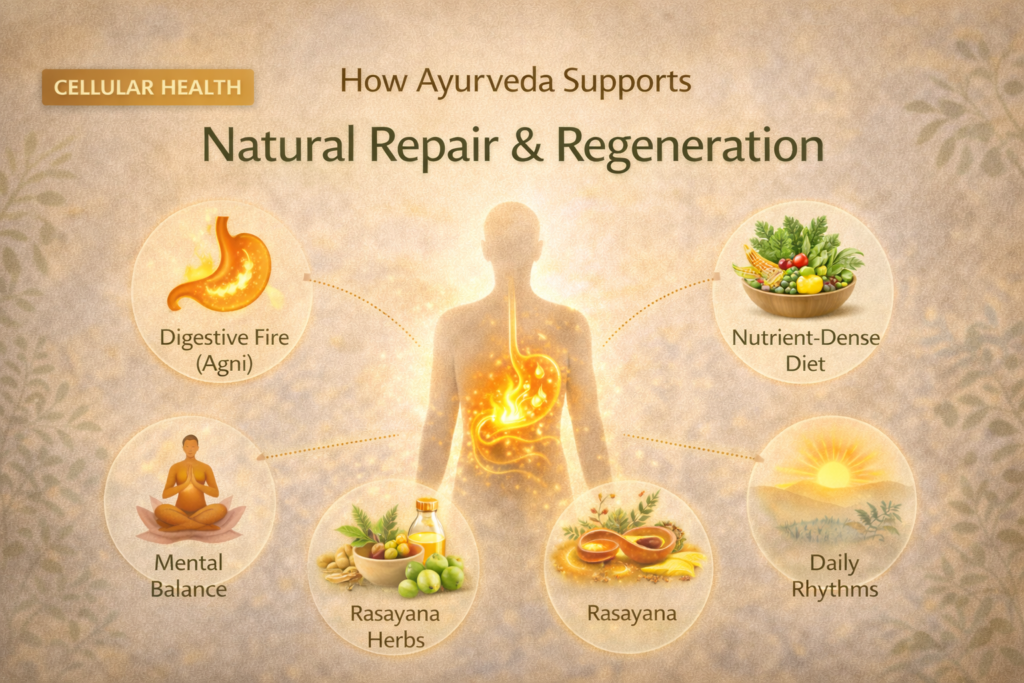
The human body is designed to repair, renew, and regenerate itself every day. Cuts heal, tissues recover, digestion resets, and energy is restored — often without conscious effort. Ayurveda is built entirely around this principle: the body already knows how to heal; it only needs the right conditions.
Rather than forcing repair through external intervention, Ayurveda focuses on supporting the body’s natural regenerative intelligence by correcting digestion, metabolism, lifestyle, and mental balance. Healing, in this view, is not created — it is enabled.
Regeneration in Ayurveda: A Foundational Idea
Ayurveda does not describe repair and regeneration as isolated biological events. It sees them as outcomes of systemic balance.
According to Ayurveda, natural repair depends on:
- Strong digestion (Agni)
- Proper tissue nourishment (Dhatu Poshana)
- Clear metabolic pathways (Srotas)
- Low toxin load (Ama)
- Balanced nervous system
- Stable daily rhythm (Dinacharya)
When these are aligned, regeneration happens continuously and effortlessly.
Digestion as the Root of Repair
Ayurveda places digestion (Agni) at the center of all healing.
Why digestion matters for regeneration:
- All tissues are formed from digested food
- Poor digestion creates toxins that block repair
- Strong digestion ensures proper nutrient delivery
- Healing tissues require steady metabolic support
If digestion is weak or erratic, even the best nutrients cannot support repair. Ayurveda therefore begins every healing process by correcting digestion, not targeting the damaged tissue directly.
Tissue Intelligence & Regeneration
Ayurveda explains the body through seven tissues (Dhatus), each responsible for structure, strength, and function.
Healthy tissue regeneration requires:
- Balanced tissue metabolism (Dhatvagni)
- Proper sequencing of nourishment
- Aequate rest and recover
- Minimal inflammation
When tissue metabolism is disturbed, repair slows down. This is why chronic conditions often persist — not because the body cannot heal, but because the internal environment is not supportive.
The Role of Ojas in Repair
Ojas is described as the essence of all tissues and the foundation of vitality, immunity, and healing capacity.
Strong Ojas supports:
- Faster tissue repair
- Resistance to disease
- Emotional stability
- Longevity
Low Ojas results in:
- Slow healing
- Frequent illness
- Fatigue
- Degeneration
Ayurveda focuses on building Ojas gradually through nourishment, routine, rest, and mental calmness — rather than overstimulation.
Detoxification: Clearing the Path for Healing
Repair cannot occur efficiently when toxins (Ama) obstruct metabolic channels.
Ama:
- Blocks nutrient delivery
- Creates inflammation
- Slows tissue regeneration
- Confuses metabolic signaling
Ayurveda supports gentle, regular detoxification, not aggressive cleansing. Daily elimination, proper digestion, and routine prevent toxin buildup, allowing repair processes to function without obstruction.
Nervous System & Regeneration
Modern science now confirms what Ayurveda emphasized long ago: stress slows healing.
Ayurveda explains this through imbalance in Vata dosha, which governs:
- Nervous system activity
- Tissue communication
- Repair signaling
- Rest and recovery
Chronic stress:
- Disturbs digestion
- Increases inflammation
- Weakens repair mechanisms
- Depletes vitality
Ayurveda supports regeneration by calming the nervous system through routine, sleep regulation, breath awareness, and stability — creating the internal state needed for healing.
Daily Rhythm & Cellular Repair
Ayurveda strongly emphasizes alignment with natural rhythms.
Why routine matters:
- Repair processes peak during rest
- Hormonal balance supports regeneration
- Digestion and elimination follow biological clocks
- Disrupted routine confuses repair signals
Late nights, irregular meals, and constant stimulation interrupt the body’s repair cycles. Consistent routine restores them.
Regeneration vs Forceful Healing
Ayurveda makes a key distinction:
- Forceful healing tries to override the body
- Natural repair supports the body’s intelligence
Suppression of symptoms may provide temporary relief, but long-term regeneration requires restoration of balance.
This is why Ayurveda prioritizes:
- Gradual improvement
- Consistency
- Internal correction
- Long-term resilience
Why Healing Capacity Declines
Ayurveda explains declining regeneration through:
- Weak digestion
- Chronic toxin accumulation
- Persistent stress
- Irregular lifestyle
- Inadequate rest
Correcting these restores the body’s inherent ability to repair — regardless of age.
What Natural Regeneration Looks Like
When Ayurvedic principles are aligned, people often experience:
- Faster recovery
- Improved energy
- Better digestion
- Stable immunity
- Reduced inflammation
- Slower degeneration
These are signs that repair is happening naturally and continuously.