
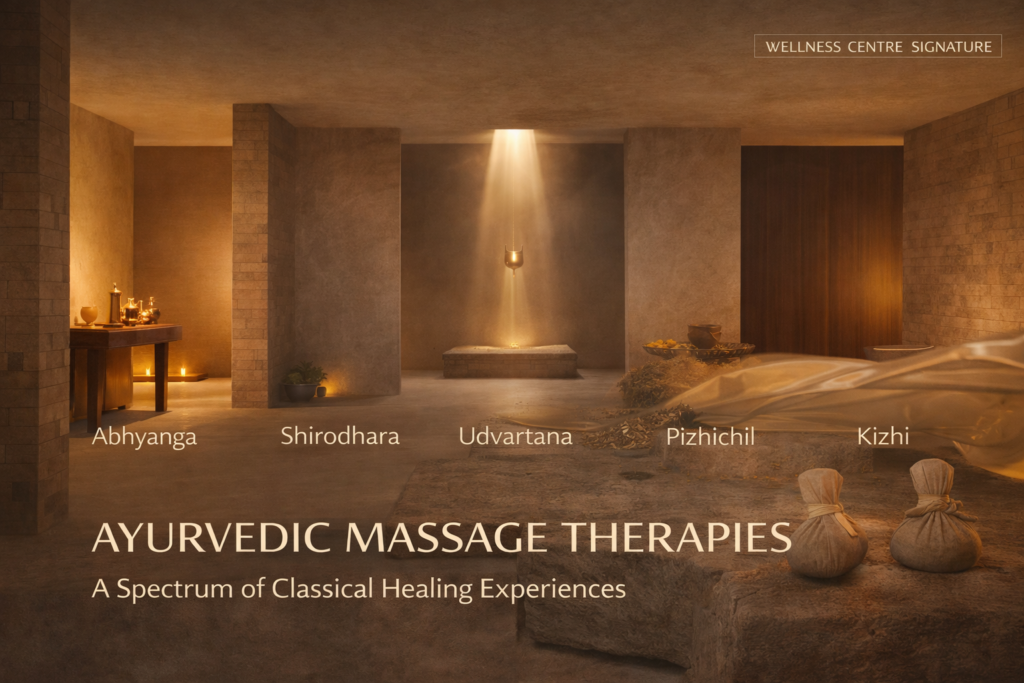
Ayurvedic massage therapies are not designed for relaxation alone. In Ayurveda, massage (Abhyanga) is a therapeutic intervention that supports healing, balance, and long-term health when chosen correctly.
Unlike modern massage systems that focus primarily on muscles, Ayurvedic massage works on:
- Dosha balance
- Nervous system regulation
- Circulation and detox pathways
- Tissue nourishment
- Mind–body integration
Each therapy is selected based on an individual’s constitution, condition, digestion, and stage of imbalance. Understanding the different types of Ayurvedic massage therapies helps clarify why one therapy works for one person but not for another.
How Ayurveda Classifies Massage Therapies
Ayurvedic massages differ based on:
- Type of oil or herbal preparation used
- Temperature and pressure
- Duration and rhythm
- Targeted body systems
- Therapeutic intention (detox, nourishment, calming, stimulation)
Below are the most commonly practiced Ayurvedic massage therapies and their purpose.
1. Abhyanga – Full Body Oil Massage
Abhyanga is the foundation of Ayurvedic massage therapies.
Purpose:
- Daily nourishment
- Nervous system calming
- Joint and tissue lubrication
- Prevention of degeneration
Key Features:
- Warm oil
- Gentle to moderate pressure
- Rhythmic strokes
Abhyanga is ideal for stress, fatigue, dryness, stiffness, and preventive care.
2. Shiro Abhyanga – Head & Neck Oil Massage
This therapy focuses on the head, neck, and shoulders.
Purpose:
- Nervous system relaxation
- Mental clarity
- Stress reduction
- Sleep support
Key Features:
- Warm oil applied to scalp and neck
- Gentle pressure
- Shorter duration than full Abhyanga
It is especially beneficial for people with mental exhaustion, anxiety, headaches, or poor sleep.
3. Shirodhara – Continuous Flow Therapy
Shirodhara involves a continuous stream of warm liquid over the forehead.
Purpose:
- Deep mental relaxation
- Nervous system reset
- Emotional balance
- Improved sleep quality
Key Features:
- Continuous rhythmic flow
- Minimal physical movement
- Profound calming effect
Shirodhara is considered one of the most powerful therapies for stress-related conditions.
4. Udvartana – Dry or Herbal Powder Massage
Udvartana is a stimulating massage performed using herbal powders.
Purpose:
- Fat metabolism support
- Kapha balance
- Circulation stimulation
- Reduction of heaviness
Key Features:
- Dry or slightly oily powders
- Upward, firm strokes
- Energizing effect
It is commonly used in weight management and metabolic imbalance.
5. Pizhichil – Oil Bath Therapy
Pizhichil combines massage with continuous pouring of warm oil over the body.
Purpose:
- Deep tissue nourishment
- Nervous system stabilization
- Joint and muscle support
- Degenerative condition management
Key Features:
- Large quantity of warm oil
- Synchronized pouring and massage
- Highly nourishing
It is traditionally used for weakness, chronic fatigue, and neurological conditions.
6. Njavara Kizhi – Herbal Bolus Massage
This therapy uses herbal rice boluses dipped in medicated liquid.
Purpose:
- Muscle nourishment
- Strength building
- Recovery support
- Tissue rejuvenation
Key Features:
- Warm herbal boluses
- Gentle pounding and massage
- Rejuvenative effect
Often used during recovery and strengthening phases.
7. Elakizhi – Herbal Leaf Bolus Massage
Elakizhi uses warm herbal leaf bundles for massage.
Purpose:
- Pain relief
- Reduction of inflammation
- Muscle relaxation
- Circulation improvement
Key Features:
- Heated herbal leaves
- Targeted application
- Stronger stimulation
Used commonly for joint pain, stiffness, and muscular tension.
8. Kati Basti / Greeva Basti – Localized Oil Retention
These therapies involve retaining warm oil over specific body regions.
Purpose:
- Local pain relief
- Joint nourishment
- Spine and disc support
Key Features:
- Oil pooling over affected area
- Localized effect
- Deep penetration
Best for back pain, neck pain, and joint degeneration.
Why One Massage Does Not Suit Everyone
Ayurveda emphasizes that massage therapy must be:
- Dosha-appropriate
- Digestively suitable
- Timed correctly
- Customized in intensity and duration
For example:
- Excess oil may worsen heaviness in some people
- Strong stimulation may aggravate nervous imbalance
- Nourishing therapies may be ineffective if toxins are high
This is why proper assessment is essential before choosing a therapy.
Massage as Part of a Healing Plan
In Ayurveda, massage therapies are rarely used alone. They are combined with:
- Dietary correction
- Digestive strengthening
- Detoxification (when required)
- Lifestyle alignment
Massage supports healing — it does not replace foundational balance.
Signs a Massage Therapy Is Beneficial
When chosen correctly, Ayurvedic massage may result in:
- Improved sleep
- Reduced pain or stiffness
- Better energy
- Mental calmness
- Improved digestion
- Faster recovery
Benefits increase with consistency and correct sequencing.