Ayurvedic Spine Care

Spondylosis

Ayurvedic support for spine pain, stiffness, cervical, thoracic and lumbar spondylosis, nerve discomfort, and long-term mobility care.

Ayurvedic spine care and spondylosis wellness support
Philosophy Balancing Vata and nourishing the spine
Ayurvedic Spine Care

Spondylosis

Ayurvedic support for spine pain, stiffness, cervical, thoracic and lumbar spondylosis, nerve discomfort, and long-term mobility care.

Definition

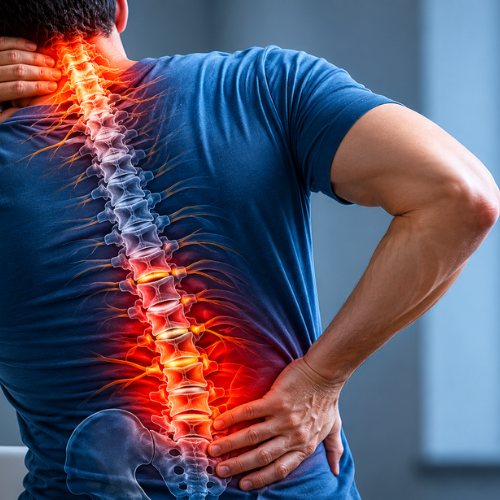
Spondylosis is a spinal degenerative osteoarthritis of the spine between the centre of the spinal vertebrae and/or neural foramina, occurring due to aging or early wear and tear. The word is derived from the Greek word “spondyl,” meaning vertebrae.

Ayurvedic View

According to Ayurveda, Spondylosis can be correlated to Sandhigata Vata. Vata governs movement and has a strong relationship with the musculoskeletal and nervous systems. Vitiation of Vata, either independently or due to obstruction caused by Kapha and Pitta, is responsible for this condition.

Symptoms

Symptoms include pain and stiffness, weakness in the legs and arms, abnormal reflexes, muscle spasm, numbness or tingling in the extremities, tiredness, loss of control over bladder or bowel movement, and fractures of vertebra from osteoporosis.

Why Ayurveda?

Ayurvedic treatment for Spondylosis focuses on balancing Vata Dosha and nourishing Kapha. The care approach supports the spine, nervous system, muscles, ligaments, and mobility through therapies, internal medications, activities, food, and lifestyle correction.
The Holistic Wellness Pathway

Ayurvedic Line of Treatment

The Ayurvedic line of treatment for Spondylosis focuses on balancing Vata Dosha and nourishing Kapha. The treatment modalities include Panchakarma, external therapies, internal medications, specific activities, and personalized advice on food and lifestyle changes.

1

Balancing Vata Dosha

The primary principle is to balance aggravated Vata, which influences movement, the musculoskeletal system, and the nervous system. Vata correction supports pain, stiffness, and degenerative spine concerns.

2

Nourishing Kapha

The treatment also focuses on nourishing Kapha to support lubrication, stability, and strength in the spine, ligaments, discs, and surrounding tissues.

3

Panchakarma Support

Panchakarma may include Basti, Virechana, and Nasya, selected according to the patient’s condition, region of spine involvement, age, and severity of symptoms.

4

External Ayurvedic Therapies

External therapies may include Abhyanga, PPS, SSPS, Dhara, Sthanika Basti, Lepa, and Pichu to reduce pain, relax muscles, nourish tissues, and support spinal mobility.

5

Regional Basti Therapies

Region-specific therapies such as Greeva Basti, Kati Basti, Prishtavamsha Basti, and Skanda Basti are used based on cervical, thoracic, lumbar, or shoulder-spine involvement.

6

Activities

Specific Asanas, Pranayama, Physiotherapy, and Aqua Yoga are included to support flexibility, posture correction, strengthening, and long-term movement confidence.

7

Food & Lifestyle Changes

Food and lifestyle recommendations are personalized according to the individual’s constitution, nature of work, posture habits, geographical conditions, and daily physical strain.

Begin Your Journey To Better Spine Mobility

Looking for Personalized Ayurvedic Guidance?

Every individual’s body constitution, spine region affected, age, posture, work activity, nerve involvement, and severity of Spondylosis are different. At Indus Valley Ayurvedic Centre, our Ayurvedic doctors assess your condition and suggest a personalized line of care.

Request Confirmed We will get in touch with you shortly.