Definition
Panchakarma is a treatment program for the body, mind, and consciousness that cleanses and rejuvenates. It is based on Ayurvedic principles and recognizes every human being as a unique expression of Ether, Air, Fire, Water, and Earth.
A classical Ayurvedic treatment program for the body, mind, and consciousness that cleanses, rejuvenates, and supports restoration of doshic balance.
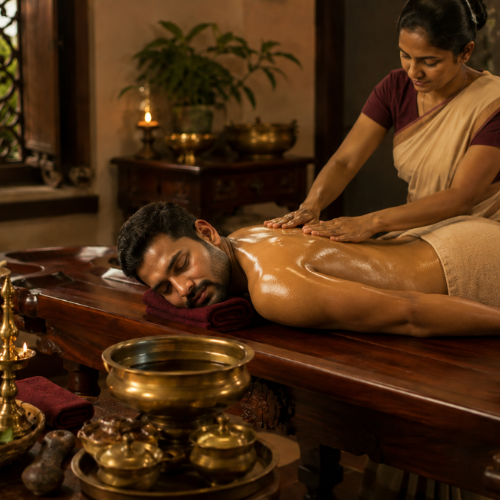
A classical Ayurvedic treatment program for the body, mind, and consciousness that cleanses, rejuvenates, and supports restoration of doshic balance.
Panchakarma is a treatment program for the body, mind, and consciousness that cleanses and rejuvenates. It is based on Ayurvedic principles and recognizes every human being as a unique expression of Ether, Air, Fire, Water, and Earth.
The combination of the five elements creates the three Doshas: Vata, Pitta, and Kapha. Each individual has a unique doshic balance, and when this balance is disturbed, disorder and disease may arise.
Panchakarma is done individually for each person with their specific constitution and disorder in mind. It requires close observation and supervision by skilled Ayurvedic professionals.
Ayurvedic treatment for panchakarma aims to balance Vata and nourish Kapha in the joints. It offers longer-lasting support without the side effects often associated with long-term pain-based management.
Depending on individual need, all five therapies or only selected parts of Panchakarma may be used. Sometimes two or three therapies are linked together to form the basis of the treatment.
Panchakarma is planned individually after understanding the person’s constitution, doshic balance, specific disorder, strength, and wellness requirement.
Treatment begins with pre-purification measures such as Snehan and Svedana to prepare the body before deeper cleansing methods are applied.
After preparation, cleansing methods known as Shodanas are applied according to the person’s health condition and therapeutic need.
Vaman refers to therapeutic vomiting and Virechan refers to therapeutic purgation. These are selected only when suitable for the patient’s condition.
Basti refers to therapeutic enema and Nasya refers to nasal application. These therapies are selected based on dosha involvement and clinical requirement.
Rakthamoksha refers to blood purification and is used only when appropriate under proper Ayurvedic supervision.
Panchakarma is widely done at IVAC with skilled professionals in a classical and traditional way, with 35+ Panchakarma therapies performed monthly.
Every individual’s constitution, doshic balance, health condition, strength, age, and wellness goal are different. At Indus Valley Ayurvedic Centre, our Ayurvedic doctors assess your condition and recommend a personalized Panchakarma plan.