Definition
Cardiovascular disease includes diseases of the heart and circulation, including coronary heart disease, heart failure, congenital heart disease, and stroke. It is also called heart and circulatory disease.
Ayurvedic supportive care for heart and circulatory health, coronary heart disease, heart failure, stroke risk factors, stress, lifestyle imbalance, and long-term cardiovascular wellness.
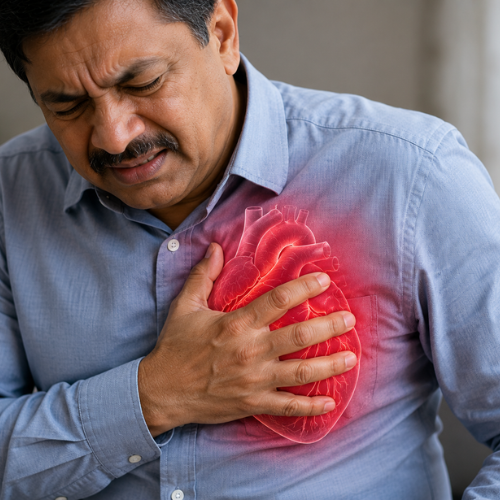
Ayurvedic supportive care for heart and circulatory health, coronary heart disease, heart failure, stroke risk factors, stress, lifestyle imbalance, and long-term cardiovascular wellness.
Cardiovascular disease includes diseases of the heart and circulation, including coronary heart disease, heart failure, congenital heart disease, and stroke. It is also called heart and circulatory disease.
According to Ayurveda, the heart is a vital organ that carries the spirit of all body tissues and supports healthy life. The heart is managed by Vyana Vata for blood flow and beat, Sadhaka Pitta for emotional balance, and Avalambaka Kapha for a sense of security.
Allergic reactions may appear as respiratory, skin, or food-related disorders. Examples include asthma, eczema, and hay fever. Symptoms may be triggered when the body remembers previous exposure to an allergen and releases chemicals that lead to an allergic reaction.
Ayurveda looks at cardiovascular disease holistically and aims to address the root. Depending on the pathology, Ayurvedic treatments are supportive and supplementary to mainstream conventional medicine, with attention to lifestyle, stress, diet, circulation, and dosha balance.
The line of treatment depends on the pathology. Ayurvedic treatments are supportive and supplementary to mainstream conventional medicine. Treatment modalities include Panchakarma, external therapies, internal herbal medications, specific activities, and advice on food and lifestyle changes.
Ayurveda maintains that the cause of cardiovascular disease often begins in the stomach. Strengthening Agni helps prevent half-digested food, Ama formation, and immune over-reaction.
When Ama moves beyond the digestive tract and settles in tissues, it can clog internal pathways and make the body hyper-responsive. Detoxification helps reduce this toxic load.
Good quality Ojus supports the body’s ability to fight disease. The treatment supports Ojus, immunity, and balanced response to harmless substances.
Panchakarma therapies may include Vamana, Virechana, and Nasya, selected according to the person’s cardiovascular disease type, digestive strength, and physician assessment.
External therapies may include Abhyanga, Lepa, and Shirodhara to support relaxation, stress management, nervous system balance, and overall recovery.
Specific Asanas, Pranayama, and Meditation are included to help stabilize the nervous system, reduce stress, and support healthier cardiovascular response.
Food that aids easy digestion is advised. Warm water intake is encouraged, heavy foods are avoided, and lifestyle is aligned so it does not disturb natural bodily rhythms.
Every individual’s cardiovascular disease triggers, digestion, stress level, Ojus strength, constitution, lifestyle, and cardiovascular response pattern are different. At Indus Valley Ayurvedic Centre, our Ayurvedic doctors assess your condition and suggest a personalized line of care.